

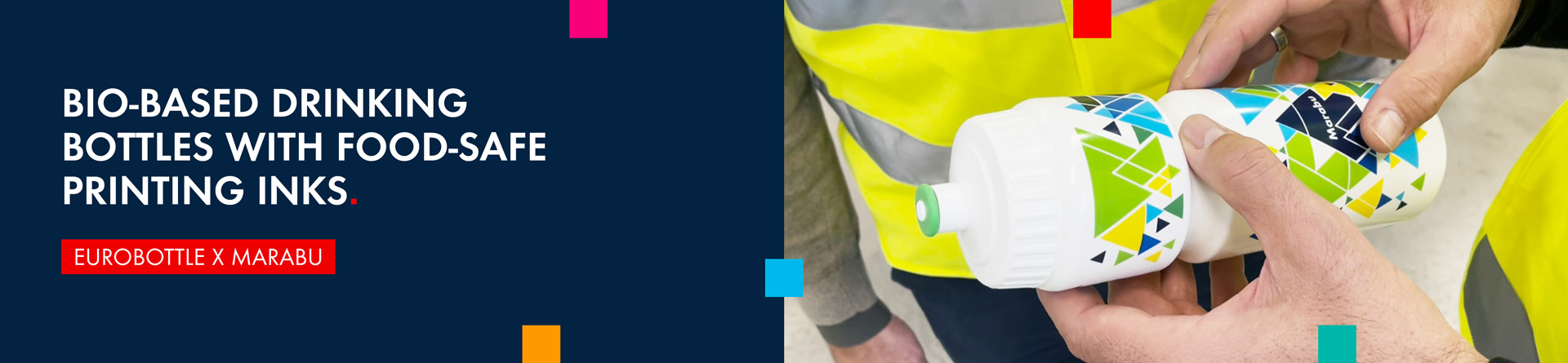
How can sustainable drinking bottles truly be made safe? Eurobottle, a pioneer in bio-based sports bottles, faced the challenge of making the printing process on their bottles both food-safe and eco-friendly. Together with their printing partner Bewel and the low-migration inks from Marabu, they found a solution that sets new standards for the industry.
Eurobottle already uses bio-based plastic derived from sugarcane, a material that captures CO2 and is recyclable. However, printing posed a significant hurdle: conventional printing inks carry the risk of substances migrating through the plastic, potentially compromising food safety. The requirements were clear: an ink that ensures high food safety, excellent adhesion, and environmental compatibility.
"The inks that we use also have to be really food safe."
– Peter Westveer, Commercial Director Eurobottle
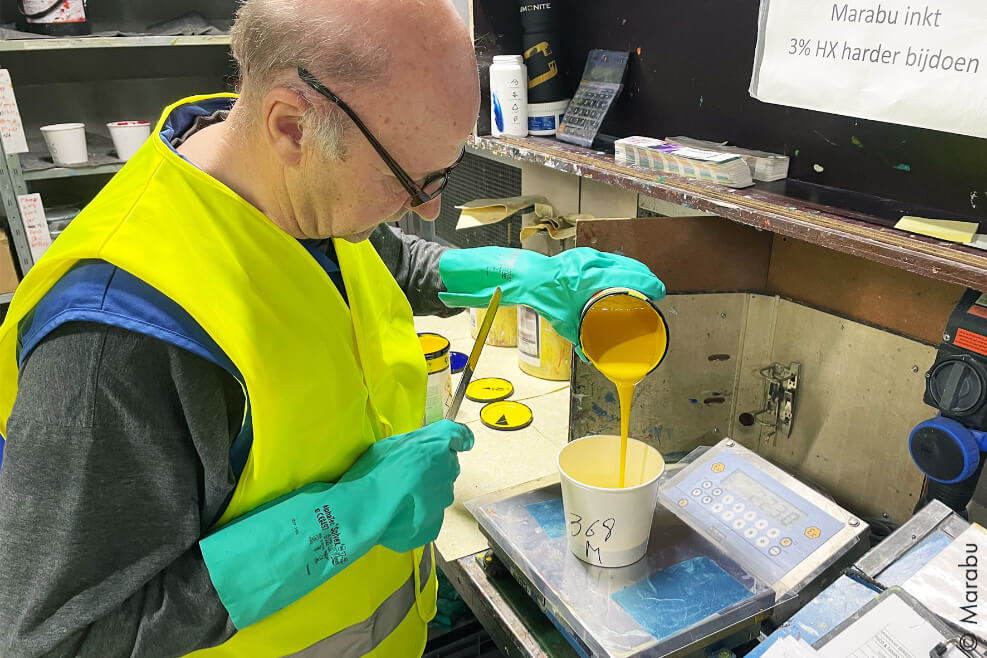
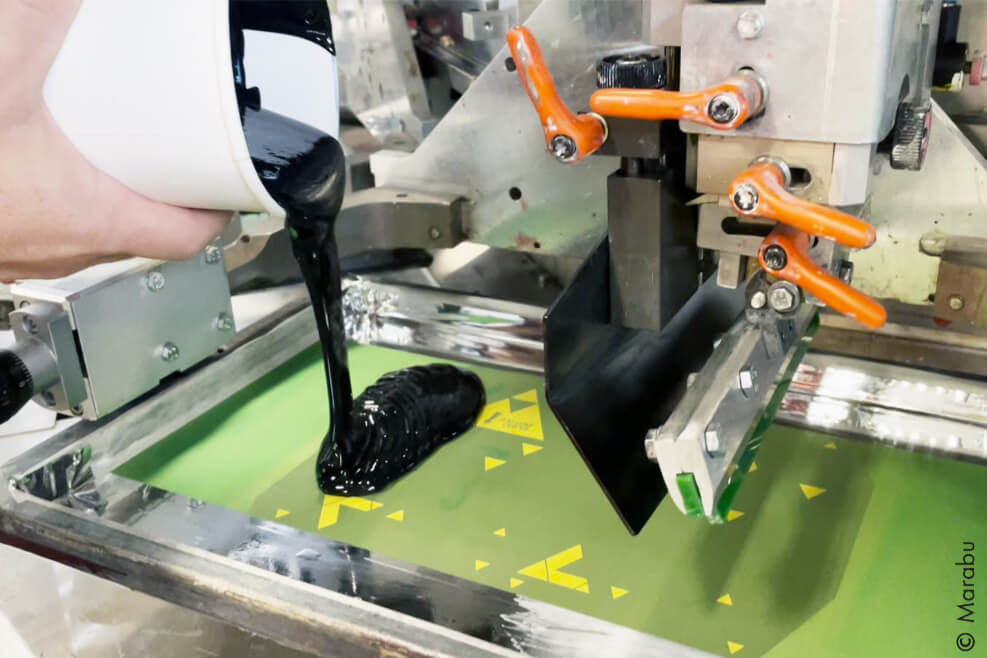
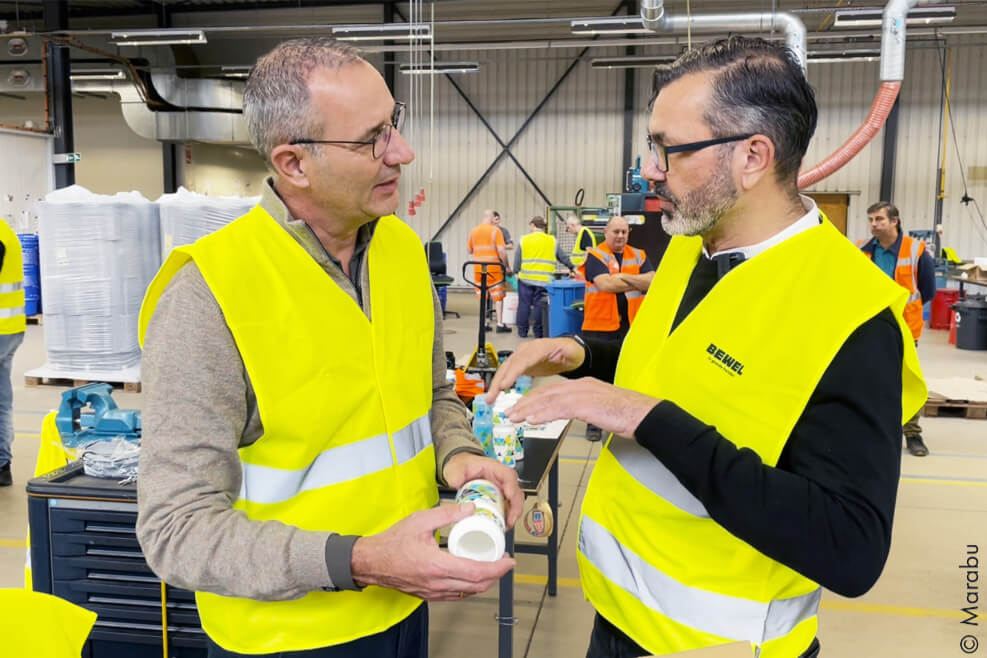
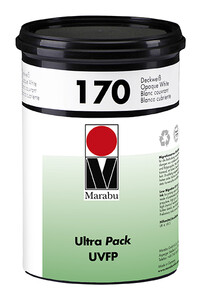
To design their bottles, Eurobottle partnered with printing specialist Bewel to use Marabu’s Ultra Pack UVFP screen printing ink. Specifically developed for the packaging industry, this low-migration UV ink meets the strictest food safety standards, including Nestlé Guidance and EuPIA-GMP certifications.
 © Marabu
Low-migration UV-curable screen printing ink for exterior surface printing onto food, cosmetics, and beverage packaging made of pre-treated PE and PP.
"Finally, in this type of ink we found the best solution that covers every aspect we look for. That means food safety that is really well organized with this material..."
– Peter Westveer, Commercial Director Eurobottle
Thanks to Marabu’s low-migration UV screen printing ink, Eurobottle was able to enhance their bottles with colors that make no compromises. The result: vibrant, bio-based plastic bottles that meet the highest safety standards. The close collaboration between Marabu and Eurobottle was key to developing a solution that is both functional and visually impressive.
Start your journey with Marabu today!
 Corporate Deutsch
 Corporate English
 Brasil
 Mexico
 China
China Danmark
 España
 France
 Italia
 Nederland
 Norge
Norge Suomi
Suomi Sverige
 USA
USA